electrical tower on grass field

SABARIGIRI HYDRO ELECTRIC POWER PLANT
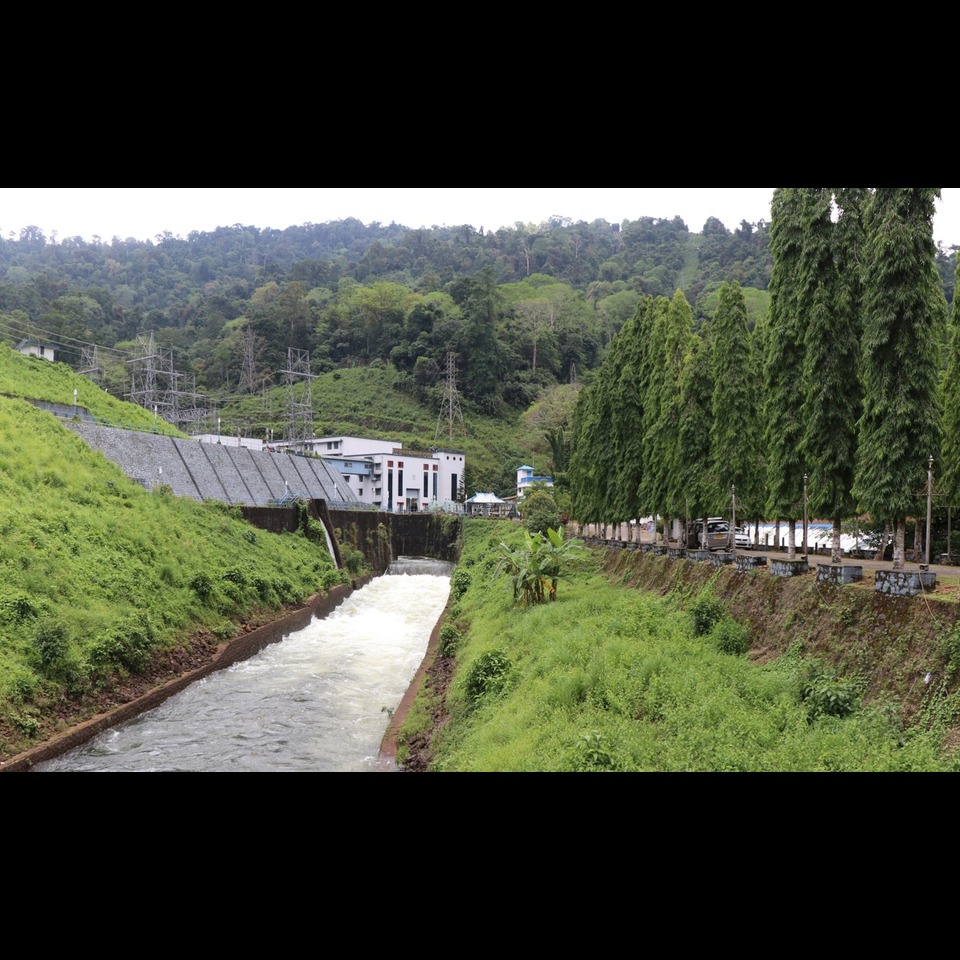
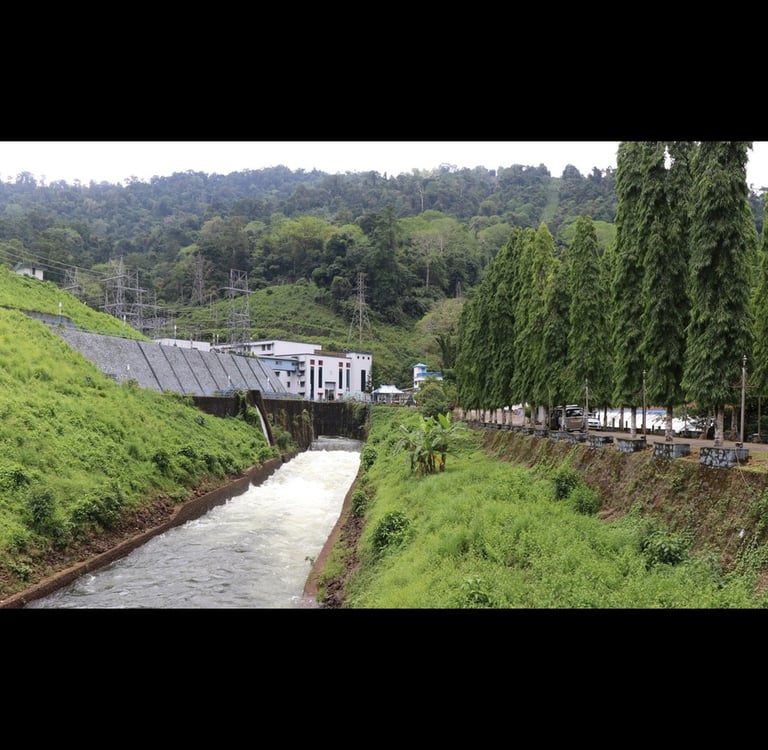
CAPACITY – 4 × 55 MW + 2 × 60 MW = 340 MW

The Sabarigiri Hydro Electric Project is the second largest Hydro Electric Project of Kerala State. It is located in Pathanamthitta district of Kerala.This Indo-American project was commissioned on 28th August 1967 by His Excellency then President of India Sri.V.V.Giri. There are two main reservoirs under Sabarigiri HEP scheme namely Kakki and Pamba reservoir. Both these reservoirs are interconnected through underground tunnel. The Kakki reservoir consists of two dams namely, Kakki dam and Anathode dam. The Kakki dam is a concrete gravity dam on Kakki river. Anathode dam is a small dam located on a river which is a tributary of Kakki river. Small augmentation reservoirs viz Kullar-Gavi, Meenar I & Meenar II are serially connected to Pamba reservoir and also Upper Moozhiyar augmenting flow to Kakki reservoir.The power house of Sabarigiri HEP receives water from Kakki dam through a tunnel and discharges into Moozhiyar dam with an installed capacity of 340 MW.The power house consists of four generators of 55 MW and two generators of 60 MW.

The tail race water released from Sabarigiri power house is further utilised to generate hydropower at 5 different power Houses in the downstream side as given below:

1. Kakkad Power house

2. Ullumkal Power house

3. Karikkayam Power house

4. Carborandom HEP

5. Ranni-Perinad Power house.

 Location: Moozhiyar, Pathanamthitta

aerial photography of white frames on top of water

WEST KALLADA FLOATING SOLAR POWER PROJECT

Location: West Kallada Reservoir, Mundakapadam Polders, Kollam District, Kerala

Capacity: 50 MW (AC) | 65 MWp (DC)

The WEST KALLADA FLOATING SOLAR POWER PROJECT adopts an efficient land utilization and revenue-sharing model by utilizing approximately 340 acres of waterlogged Mundakapadam polders, of which 291.68 acres are leased from local landowners, with 3% of total project revenue shared with them through WKNCEPPL, converting unused land into a sustainable income-generating asset. The project has an installed capacity of 65 MWp (DC) / 50 MW (AC) and uses around 1.10 lakh monocrystalline solar modules of 590 Wp each, configured as 28 modules in series and two strings in parallel per string combiner box. Power conversion is carried out using 10 inverters of 4.4 MVA and 2 inverters of 3.3 MVA, supported by inverter duty transformers (5 × 8.8 MVA and 1 × 6.6 MVA) and two main transformers rated at 31.5 MVA (33/110 kV). The floating system is divided into eight arrays (four of 11.663 MWp, two of 5.154 MWp, and two of 4.080 MWp), with DC power collected at approximately 1200 V, converted to 660 V AC by central inverters, stepped up to 33 kV through IDTs, and transmitted via floating and underwater cables from six barge stations to the main control room and 110 kV switchyard. Grid interconnection is achieved through a 1.2 km Line-In-Line-Out (LILO) arrangement on the Kundara–Chavara 110 kV line using seven transmission towers, reducing load on the Kayamkulam, Sasthamkotta, and Kundara substations and achieving a transmission loss reduction of about 1.33 MW. The project is supported by ₹7.63 crore of MNRE Central Financial Assistance and ₹11.83 crore of Kerala State Viability Gap Funding for evacuation infrastructure, with power supplied to KSEB under a 25-year PPA at a tariff of ₹3.04 per kWh and a CUF range of 19%–25%. Operationally, the plant is expected to generate 99.909 million units in the first year with a design CUF of 22.79%, yielding an estimated annual revenue of around ₹26 crore, translating to ₹9.8 lakh per acre per year at design CUF. Additionally, future integration of a Battery Energy Storage System (BESS) can enable peak-hour power supply at tariffs up to ₹7.5 per unit, further enhancing grid support and project economics.